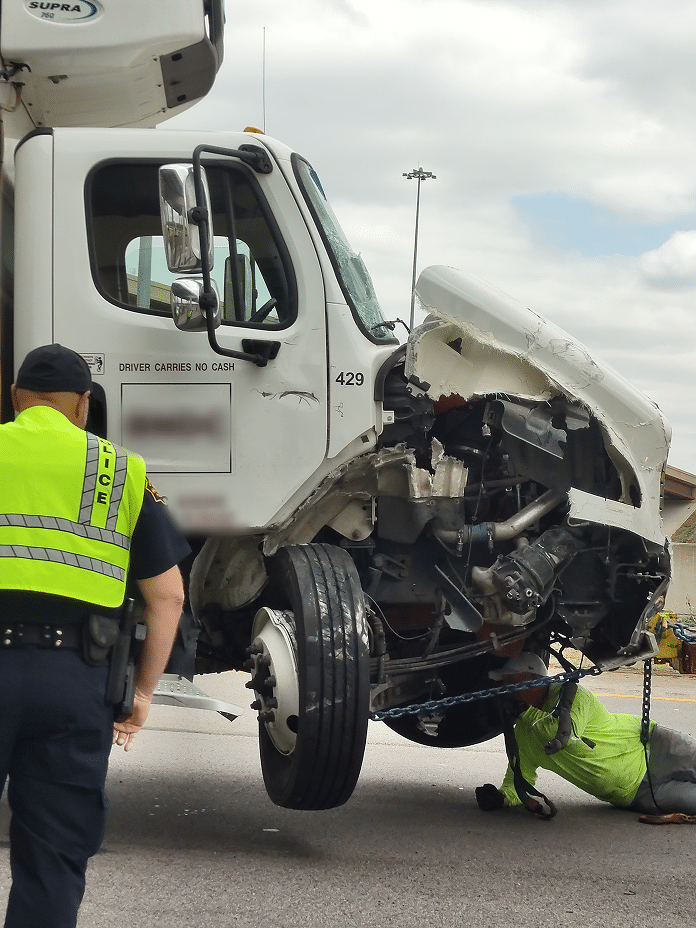



If you or someone in your family has been hurt in an offshore accident, you already know how overwhelming the days after can feel. You are dealing with painful injuries, mounting medical bills, and questions about whether you will ever be able to return to the work you depend on. The energy company and its insurance carrier are already working to protect themselves, and you deserve someone in your corner who will fight just as hard for you.
Offshore work in the oil and gas industry remains one of the most dangerous occupations in the country. The Centers for Disease Control and Prevention reports that 470 workers died in oil and gas extraction operations during a recent six-year study period, with transportation incidents accounting for the largest share of those fatalities.[1] The Bureau of Safety and Environmental Enforcement documented more than 4,400 offshore incidents during a recent nine-year reporting period, resulting in over 1,600 injuries and dozens of fatalities on platforms and rigs in the Gulf of Mexico alone.[2] Many of the workers who survive these accidents suffer catastrophic injuries that change their lives forever, including traumatic brain injuries, spinal cord damage, severe burns, and crushed limbs.
At Jim Adler, The Texas Hammer®, we have spent more than 50 years fighting for injured Texans across San Antonio and Bexar County, and we are ready to fight for you, too. Our San Antonio offshore accident lawyer team understands the federal maritime laws that protect offshore workers, and we know how to take on the billion-dollar energy companies and their insurers to pursue the full compensation you deserve.
With offices serving San Antonio and communities throughout Texas, our team can move quickly to investigate the conditions surrounding your offshore accident and start building your case. Your first step is a FREE offshore accident case review.
Call 1-800-505-1414 now or click here to get started online.
After an offshore injury, you are not facing a typical personal injury case. You are up against energy corporations with teams of lawyers and risk management specialists who started building their defense the moment your accident happened. Their goal is to minimize what they pay you, shift blame onto you, or pressure you into accepting a settlement that does not come close to covering your real losses. You should not have to navigate this fight alone, especially while you are trying to heal from serious injuries and worried about how your family will get by.
The good news is that federal maritime law provides powerful protections for injured offshore workers, and the right San Antonio offshore accident lawyer can help you take full advantage of those protections. At Jim Adler & Associates, our team of more than 30 attorneys and 300 legal professionals has the resources and experience to take on even the largest oil and gas companies. We handle every aspect of your case so you can focus on your recovery, from investigating the cause of your accident and identifying every responsible party to fighting the insurance company for every dollar you are owed. We offer a free consultation with no obligation, and you pay no fees unless we recover compensation for you.*
Offshore accidents fall under a completely different set of laws than most workplace injuries, and understanding which laws apply to your situation is one of the most important steps in protecting your rights. Most people have never heard of admiralty law or the federal statutes that govern offshore injury claims, and that knowledge gap is exactly what energy companies and their insurers count on when they try to minimize your compensation. The information below provides a general overview of the major maritime laws that may apply to your case, but every offshore accident is different, and an experienced offshore accident attorney can help you determine which legal protections give you the strongest path to full recovery.
Maritime law, also known as admiralty law, is a specialized body of federal law that governs injuries, accidents, and disputes that occur on navigable waters and certain offshore work sites. Unlike standard state workers’ compensation systems, maritime law provides injured offshore workers with the right to file negligence claims against their employers and other responsible parties, which often leads to significantly larger recoveries than workers’ compensation benefits alone would provide.
Several different federal statutes fall under the maritime law umbrella, and the one that applies to your situation depends on factors like your job duties, where you were working when the accident happened, and how much of your time you spend on vessels. An experienced Jones Act lawyer can evaluate the specific facts of your case and determine which combination of federal laws gives you the strongest claim for compensation.
The Jones Act, codified at 46 U.S.C. Section 30104, is the most important federal law protecting injured offshore workers who qualify as seamen.[4] Under the Jones Act, a seaman who is injured due to employer negligence has the right to bring a civil action against the employer with the right to a trial by jury.[4] This is a critical distinction from state workers’ compensation, which typically does not allow injured workers to sue their employers at all.
To qualify for Jones Act protection, a worker generally must contribute to the mission or operation of a vessel in navigation and must have an employment-related connection to that vessel, or an identifiable fleet of vessels, that is substantial in both duration and nature. The U.S. Court of Appeals for the Ninth Circuit model jury instructions note that a worker who spends less than roughly 30 percent of their time in service of a vessel in navigation generally should not qualify as a seaman, which means workers above that threshold typically do meet the definition.[4] The standard of proof under the Jones Act favors injured workers, requiring only that the employer’s negligence played even a small part in causing the injury. If you work on offshore drilling platforms, supply boats, crew vessels, barges, drilling rigs, or similar equipment, a Jones Act lawyer in San Antonio can evaluate whether you meet the legal definition of a seaman and can file a negligence claim on your behalf.
In addition to negligence claims under the Jones Act, injured seamen are entitled to a separate category of benefits known as maintenance and cure under general maritime law. Maintenance covers your daily living expenses while you are recovering and unable to work, including costs like housing, food, and utilities. Cure covers all reasonable and necessary medical treatment related to your injury until you reach maximum medical improvement, which is the point at which your doctors determine that your condition is unlikely to improve further with additional treatment.
One of the most important things to understand about maintenance and cure is that these benefits do not depend on proving that your employer was negligent. As long as your injury occurred while you were in service of the vessel, your employer is generally required to provide maintenance and cure regardless of who was at fault for the accident. Unfortunately, many employers try to cut these benefits off too early or dispute the amount they owe, counting on injured workers not knowing their rights. Our offshore accident attorney team at Jim Adler & Associates fights to make sure employers meet their full legal obligations and do not shortchange injured workers during the recovery process.
With more than 50 years fighting for injured workers, our numbers speak for themselves.
Client Received
$15, 461, 000
Attorney Fees
$10, 398, 984 .43
Expenses
$140, 015 .57
Client Received
$15, 461, 000
Attorney Fees
$10, 398, 984 .43
Expenses
$140, 015 .57
Client Received
$9, 436, 300
Attorney Fees
$6, 399, 965
Expenses
$163, 735
Client Received
$9, 436, 300
Attorney Fees
$6, 399, 965
Expenses
$163, 735
Client Received
$4, 898, 086
Attorney Fees
$3, 806, 000
Expenses
$227, 835
Client Received
$4, 898, 086
Attorney Fees
$3, 806, 000
Expenses
$227, 835
Client Received
$3, 237, 600
Attorney Fees
$2, 199, 623 .77
Expenses
$62, 776 .23
Client Received
$3, 237, 600
Attorney Fees
$2, 199, 623 .77
Expenses
$62, 776 .23
Offshore and oil rig accidents rarely happen by chance. Most of them trace back to someone cutting corners on safety, whether that is a drilling contractor skipping required maintenance, an operator pushing crews to work beyond safe limits, or a third-party vendor installing defective equipment on the rig. The Occupational Safety and Health Administration identifies vehicle collisions, struck-by and caught-in hazards, explosions and fires, falls, confined spaces, and chemical exposures as the leading safety hazards in oil and gas extraction operations.[5] Understanding what caused your accident is essential to building a strong injury claim, because the cause determines who can be held liable and how much compensation may be available to you.
The causes described in this section represent patterns that an experienced San Antonio offshore accident lawyer sees repeatedly. When these safety failures lead to a serious maritime accident on an oil rig or offshore drilling platform, the people and companies responsible should be held accountable for the harm they cause. Jim Adler, The Tough, Smart Lawyer®, and our legal team know how to investigate these cases and uncover the evidence that proves what went wrong.
Explosions and fires are among the most catastrophic events that can occur on an offshore drilling platform or oil rig. Workers in the oil and gas industry face constant exposure to flammable gases, vapors, and hydrogen sulfide that can be released from wells, production equipment, and storage tanks.[5] OSHA notes that ignition sources on these sites include static electricity, open flames, cutting and welding tools, hot surfaces, and frictional heat, meaning that a single spark in the wrong place can trigger a devastating rig explosion or offshore fire.[6] The BSEE reports that fires account for roughly 17 percent of all documented offshore incidents on the Outer Continental Shelf.[2]
When an explosion or fire occurs on an offshore platform, the injuries are often severe and life-altering. Workers caught in a blast may suffer catastrophic burns, traumatic brain injuries from the concussive force, shattered bones, and damage to internal organs. Those who survive the initial explosion may still face chemical exposure from toxic fumes released during the fire. Our offshore accident attorney team investigates the root causes of these disasters and pursues claims against every responsible party, from the operator who failed to maintain safety systems to the contractor whose negligent welding practices ignited flammable vapors.
Offshore rigs and platforms depend on an enormous amount of specialized machinery operating under extreme conditions, and equipment failure is one of the most common causes of serious offshore injuries. Blowout preventers, cranes, winches, drilling equipment, pressure control systems, and hoisting mechanisms must all function properly to keep workers safe, and a single mechanical malfunction can lead to a deadly accident. The CDC found that struck-by and caught-in incidents involving heavy equipment and objects are among the leading causes of death in the oil and gas extraction industry.[1] Defective equipment supplied by third-party manufacturers can also contribute to these accidents, creating additional avenues of third-party liability beyond the worker’s direct employer.
Companies that operate offshore facilities have a legal duty to inspect, maintain, and repair equipment regularly, and workers have a right to expect that the tools and machinery they rely on every day will function safely. When a trucking company or a drilling contractor delays critical repairs to keep production moving, or when an equipment manufacturer sells a defective component that fails under pressure, the resulting injuries are not accidents in any meaningful sense of the word. They are preventable consequences of decisions that prioritized profits over worker safety. A San Antonio offshore accident lawyer from Jim Adler & Associates can obtain maintenance logs, inspection records, and equipment certifications to prove that a company’s failures caused your injuries.
Oil rigs and offshore platforms are notoriously hazardous environments for slip and fall injuries. Workers routinely navigate slippery metal decks coated with oil, grease, drilling mud, and saltwater spray, often while carrying heavy equipment or climbing between elevated work platforms. The International Association of Oil and Gas Producers reports that slips and trips are consistently among the most frequent causes of injuries requiring time away from work in the offshore industry.[6] Falls from elevated platforms, ladders, catwalks, and drilling derricks can result in devastating injuries, including spinal cord damage, broken bones, and traumatic brain injuries that may leave workers permanently disabled.
Employers have a responsibility to maintain safe walking surfaces, provide proper fall protection systems, ensure adequate lighting, and clean up hazardous conditions before they cause injuries. When a worker slips on an oily deck that should have been cleaned, falls from a platform with no guardrail, or tumbles down a ladder because a rung was corroded and broken, the employer and the company responsible for maintaining the facility may be held liable for those injuries. The Hammer fights for workers who are hurt because someone else failed to keep the workplace safe, and our team can investigate the conditions that led to your fall to determine who should be held accountable.
Getting to and from offshore work sites is one of the most dangerous parts of the job. The CDC reports that transportation incidents account for the largest share of fatalities among oil and gas extraction workers, and the agency has noted that the fatality rate for workers in this industry is roughly seven times higher than the rate for all industries combined.[1] Workers travel to and from rigs by helicopter, crew boat, supply vessel, and other marine transport, and each mode of transportation carries its own serious risks. A helicopter crash during transit to an offshore drilling platform can be fatal, and vessel collisions, capsized crew boats, and accidents during personnel transfers between boats and platforms all cause serious injuries every year.
The BSEE offshore incident data reveals that crane incidents, which often occur during cargo loading and personnel basket transfers, account for roughly 27 percent of all documented offshore incidents.[2] Electrocution from improperly maintained electrical systems and confined space accidents involving toxic or oxygen-depleted atmospheres round out the list of dangers that offshore workers face on a daily basis.[5] When a vessel injury, helicopter crash, or transportation accident takes you away from the work you love and the family that depends on you, Bill Adler and our team of offshore accident attorneys at Jim Adler & Associates are here to fight for the compensation you deserve. Call us today for a free consultation and let us start building your case.
A serious offshore accident can leave you facing financial pressure that feels impossible to manage on your own. You may be unable to work for months or even permanently, while medical bills continue to pile up from surgeries, hospital stays, and rehabilitation. The good news is that federal maritime law generally provides injured offshore workers with the opportunity to recover significantly more compensation than a standard state workers’ compensation claim would offer. Unlike state systems that cap benefits and limit your recovery to a fraction of your wages, maritime negligence claims under the Jones Act and general maritime law allow you to pursue full damages for your losses, including the pain and suffering that state workers’ compensation does not cover at all.[3]
Workers who do not qualify as seamen under the Jones Act may still be entitled to benefits under the Longshore and Harbor Workers’ Compensation Act, a federal program administered by the U.S. Department of Labor that covers harbor workers, dock workers, and other maritime employees who are injured on or near navigable waters.[7] The Outer Continental Shelf Lands Act further extends Longshore Act protections to workers injured on fixed platforms and other structures on the outer continental shelf during oil and gas operations.[8] Determining which laws apply to your situation and how to maximize your recovery requires the kind of experience that a dedicated Jones Act lawyer brings to every case. At Jim Adler & Associates, our team evaluates every possible source of compensation to make sure nothing is left on the table.
Medical expenses are often the largest category of damages in an offshore injury case, and the costs can be staggering when you are dealing with the kinds of injuries that oil rig accidents typically cause. Emergency helicopter evacuations from offshore platforms, trauma surgeries, intensive care stays, and weeks or months of inpatient rehabilitation can generate treatment costs that reach hundreds of thousands of dollars or more. Your compensation claim should account not only for the medical bills you have already received but also for all future treatment your doctors expect you will need, including follow-up surgeries, physical therapy, pain management, prescription medications, and any assistive devices or home modifications required by your condition.
Many injured offshore workers worry about how they will pay for medical care while their case is still pending, especially if their employer has disputed their maintenance and cure benefits or cut them off prematurely. Our San Antonio offshore accident lawyer team at Jim Adler & Associates can help connect you with qualified medical providers and fight to make sure your employer meets its legal obligations to cover your treatment until you reach maximum medical improvement.
Offshore workers typically earn strong wages, and a serious injury that takes you off the job can create an immediate financial crisis for your entire family. Your compensation claim should include the lost wages you have already missed since the accident, as well as any bonuses, overtime pay, and benefits you would have earned if you had been able to continue working. For workers who face long recovery periods, these lost earnings can add up quickly.
In many offshore accident cases, the financial impact extends far beyond your immediate lost wages. If your injuries prevent you from returning to offshore work altogether, or limit you to a lower-paying position, you may be entitled to compensation for your loss of earning capacity over the remainder of your working life. Calculating future lost earnings requires careful analysis by economic experts who can project what you would have earned over the course of your career and compare that figure to what you are now able to earn given your physical limitations. An experienced offshore accident attorney from our firm works with these experts to document the full financial impact of your injuries and pursue every dollar of compensation you are owed.
One of the most significant advantages of a maritime negligence claim over a standard workers’ compensation claim is the ability to recover compensation for pain and suffering. State workers’ compensation systems typically do not allow injured workers to seek damages for the physical pain, emotional distress, and diminished quality of life that come with a serious injury. Maritime law takes a different approach, recognizing that the human cost of an offshore accident extends far beyond what medical bills and lost paychecks can measure.
Pain and suffering damages account for the physical agony you have endured and will continue to experience during your recovery, the anxiety and depression that often accompany catastrophic injuries, and the loss of activities, hobbies, and experiences that you can no longer enjoy because of what happened to you. If your injuries have affected your relationship with your spouse, including your ability to provide companionship and support, your spouse may also have a separate claim for loss of consortium. These damages can represent a substantial portion of your total recovery, and our San Antonio offshore accident lawyer team fights to make sure the full extent of your suffering is reflected in any settlement or verdict.
When a maritime accident takes the life of an offshore worker, the grief and financial devastation for the surviving family can be overwhelming. Several federal laws provide avenues for families to pursue wrongful death claims depending on the circumstances of the accident. Under the Jones Act, the personal representative of a deceased seaman may bring a civil action against the employer if negligence contributed to the death.[3] The Death on the High Seas Act, codified at 46 U.S.C. Sections 30301 through 30308, provides a separate cause of action when a worker’s death is caused by a wrongful act occurring on the high seas beyond three nautical miles from shore.[9]
Wrongful death damages may include compensation for the lost financial support the deceased worker would have provided to the family, funeral and burial expenses, loss of companionship and guidance, and the mental anguish suffered by surviving family members. These maritime lawsuit claims are complex and often involve multiple responsible parties, from the worker’s employer to vessel owners, equipment manufacturers, and third-party contractors. If your family has lost a loved one in an offshore accident, Jim Adler, The Voice of The Victims™, and our legal team are here to help you hold every responsible party accountable while pursuing the compensation your family needs to move forward. You can reach us for a free consultation at any time, and you will never pay a fee unless we recover compensation for your family.*
“The insurance company wanted me to settle for a lot less and Jim Adler negotiated for me to get a lot more. ” Ariana
“Jim Adler took care of, literally, everything. I didn't have to do anything.” Whitney
“Man, he worked fast. From my vehicle getting fixed ... and getting paid what I deserve for the accident. ” Sergio
“Jim Adler was to me, he was the last string of hope that I had. He was my saver.” Bryan
“I called Jim Adler and he came through. They got me more than the insurance company had offered.” Tamara
“Definitely took charge of the situation from the very beginning. It was A-Z. I didn't have to do anything... I was definitely happy with the compensation.” Troy
One of the biggest differences between an offshore accident case and a typical workplace injury claim is the number of companies that may share responsibility for what happened to you. Offshore operations involve a complex web of operators, drilling contractors, vessel owners, equipment suppliers, and subcontractors, and each one of these companies has its own insurance coverage. Identifying every responsible party matters because it directly affects how much compensation may be available to cover your injuries. When a San Antonio offshore accident lawyer investigates your case, the goal is to trace your accident back to every company and individual whose negligence contributed to your injuries, so that no responsible party escapes accountability and no source of insurance coverage is left untapped.
Our offshore accident attorney team at Jim Adler & Associates has spent decades untangling the complicated relationships between the companies that operate in the Gulf of Mexico and along the Texas coast. We know that these corporations will point fingers at each other to avoid paying what they owe, and we know how to cut through those tactics and build a case that holds each one of them accountable for the role they played.
Your employer is often the most obvious starting point in an offshore injury case, and the Jones Act specifically gives injured seamen the right to sue their employers for negligence.[3] Employer negligence in the offshore industry can take many forms, from pressuring crews to skip safety procedures and meet aggressive production schedules to failing to provide adequate training before sending workers into dangerous conditions. Some employers violate federal rest requirements, forcing fatigued workers to continue operating heavy equipment when they should be off duty, while others ignore known hazards on the rig or platform and hope that nothing goes wrong.
Under the Jones Act, the standard of proof for employer negligence is lower than in most personal injury cases, requiring only that the employer’s negligence played even a small part in causing your injury.[3] This worker-friendly standard exists because Congress recognized that offshore workers face uniquely dangerous conditions and deserve strong legal protections when their employers fail to keep them safe. If your employer cut corners on safety in any way that contributed to your accident, a Jones Act lawyer from our firm can hold them accountable.
The company that owns the vessel you were working on may be a separate entity from your direct employer, and vessel owners carry their own distinct legal obligations under general maritime law. Every vessel owner has a duty to provide a seaworthy vessel, which means the vessel and all of its equipment must be reasonably fit for their intended purpose. A vessel can be deemed unseaworthy if it has defective equipment, unsafe walking surfaces, inadequate safety gear, improperly maintained machinery, or an insufficiently trained crew.
Unseaworthiness claims are separate from Jones Act negligence claims and can be pursued at the same time, giving injured workers two powerful legal theories to present. The advantage of an unseaworthiness claim is that it does not require you to prove that the vessel owner was negligent. You only need to show that a condition on the vessel was not reasonably fit and that the condition caused or contributed to your injury. Our team investigates vessel conditions thoroughly, reviewing inspection records, maintenance logs, and safety certifications to determine whether an unseaworthy condition played a role in your offshore accident.
Offshore operations typically involve dozens of different companies working side by side on the same rig or platform, and the negligence of any one of these third-party contractors can cause a serious accident. A catering company that spills grease on a deck and does not clean it up, a crane operator from a separate company who drops a load onto workers below, or a mud logging contractor whose careless actions trigger a well control event can all bear third-party liability for the injuries they cause. These claims are separate from your Jones Act case against your employer and can significantly increase the total compensation available to you because each contractor typically carries its own liability insurance.
Identifying third-party contractors who share responsibility requires a thorough investigation into everyone who was working on or around the rig at the time of your accident. Our San Antonio offshore accident lawyer team reviews contracts, work permits, safety meeting records, and witness statements to determine which companies were present and whether their actions or failures contributed to your injuries. When we find evidence of third-party negligence, we pursue those claims aggressively to maximize your recovery.
Defective equipment is a leading contributor to serious offshore accidents, and the companies that design, manufacture, and sell that equipment can be held liable when their products fail and injure workers. Blowout preventers that malfunction during a well control event, cranes with faulty hydraulic systems, defective personal protective equipment, and drilling components that crack or shatter under normal operating conditions are all examples of product failures that can cause catastrophic injuries or death on an offshore platform.
Product liability claims against equipment manufacturers operate under a different legal framework than negligence claims against employers or vessel owners. In many cases, you do not need to prove that the manufacturer was negligent. You only need to show that the product was defective and that the defect caused your injury. These claims can add a significant layer of compensation to your case because equipment manufacturers typically carry substantial insurance policies. Our team works with engineering experts and product safety specialists to analyze failed equipment and determine whether a manufacturing defect, design flaw, or inadequate warning contributed to your offshore accident.
After a serious offshore injury, the legal team you choose can make the difference between a settlement that barely covers your medical bills and a recovery that truly accounts for everything this accident has cost you and your family. Energy companies and their insurers spend millions of dollars every year defending against maritime injury claims, and they count on injured workers hiring firms that do not have the resources or experience to fight back effectively. You need a firm that will match their firepower and refuse to back down until you receive the compensation you deserve.
At Jim Adler & Associates, we bring more than 50 years of experience fighting for injured Texans against some of the largest corporations in the country. Our team of more than 30 attorneys and 300 legal professionals has the financial resources to build your case the right way, including retaining accident reconstruction experts, maritime safety specialists, medical professionals, and economists who can calculate the full value of your losses. We prepare every case as if it is going to trial, because insurance companies know which firms are willing to take cases before a jury and which ones will accept whatever offer lands on the table. When the defense knows that The Texas Hammer® is on your side, they have much more incentive to offer fair compensation rather than risk a verdict. We handle offshore injury cases on a contingency fee basis, which means you pay no upfront costs and we advance all expenses required to build your case. If your case settles before a lawsuit is filed, our fee is 35 percent of the recovery, and if filing a maritime lawsuit becomes necessary, the fee is 40 percent of the recovery. You pay no fee unless we recover compensation for you.* Our team is available to speak with you in both English and Spanish, and your initial consultation is completely free. Call us today or fill out the form on this page to get started.
After a serious offshore accident, you probably have questions about your rights, your legal options, and how to protect your family’s future. The answers below address some of the concerns we hear most often from injured offshore workers in San Antonio and across Texas. If your specific question is not covered here, our team is always available to speak with you directly during a free consultation.
A maritime injury is generally any injury that occurs on navigable waters or on certain offshore structures connected to navigable waters, such as oil rigs, offshore drilling platforms, production platforms, supply vessels, crew boats, barges, and jack-up rigs. The injury does not need to happen while you are physically on the water to qualify under federal maritime law. Workers who are injured on fixed platforms on the outer continental shelf may be covered under the Outer Continental Shelf Lands Act, which extends Longshore and Harbor Workers’ Compensation Act protections to employees engaged in offshore oil and gas operations.[7][8]
The specific federal law that applies to your situation depends on several factors, including your job duties, where you were working at the time of the accident, and whether you qualify as a seaman under the Jones Act or as a harbor worker under the Longshore Act. Because the wrong classification can significantly affect the amount of compensation available to you, consulting with an experienced offshore accident attorney who understands these distinctions is one of the most important steps you can take after an offshore injury.
If you qualify as a seaman under the Jones Act, you have the right to bring a negligence lawsuit against your employer, which is a right that most land-based workers covered by state workers’ compensation systems do not have.[3] To qualify, you generally must contribute to the mission or operation of a vessel in navigation and must have a substantial employment connection to that vessel or an identifiable fleet of vessels.[4] The Ninth Circuit model jury instructions note that workers who spend roughly 30 percent or more of their time in service of a vessel typically meet this threshold.[4]
The Jones Act also provides a lower burden of proof than most negligence claims. You do not need to prove that your employer’s negligence was the primary cause of your injury. You only need to show that the employer’s negligence played any part, even a small one, in causing the conditions that led to your accident. This favorable standard means that many offshore workers who might lose a negligence case under ordinary rules can still recover compensation under the Jones Act. Our team at Jim Adler & Associates evaluates each client’s work history and job duties to determine whether Jones Act protection applies and builds the strongest possible case when it does.
The deadline for filing a maritime injury claim depends on which federal law applies to your case. Under 46 U.S.C. Section 30106, the general statute of limitations for personal injury or death arising from a maritime tort is three years from the date the cause of action arose.[10] This three-year deadline applies to Jones Act negligence claims and general maritime law claims, including claims for unseaworthiness and maintenance and cure.
If your claim falls under the Longshore and Harbor Workers’ Compensation Act, the filing deadline is significantly shorter. You must provide written notice to your employer within 30 days of the injury and file a formal claim with the U.S. Department of Labor within one year of the injury or within one year of the last payment of compensation.[7] Missing these deadlines can permanently destroy your right to seek benefits, regardless of how serious your injuries may be. Because these time limits vary depending on the law that applies to your situation, contacting an attorney as soon as possible after your accident is critical to protecting your rights and preserving the evidence you need to build a strong case.
Under the Jones Act and general maritime law, you can still recover compensation even if you were partially responsible for the accident that caused your injuries. Maritime law applies a pure comparative fault standard, which means your damages will be reduced by your percentage of responsibility, but you are not barred from recovery unless you were entirely at fault. This is a significant advantage over the modified comparative fault rules that apply in many state personal injury cases, where being more than 50 percent at fault can eliminate your right to recover anything at all.
For example, if a jury determines that your total damages are worth $500,000 and you were 25 percent at fault for the accident, you would still recover $375,000. Energy companies and their insurers know this rule well, and one of their most common tactics is to try to shift as much blame as possible onto the injured worker to reduce the amount they have to pay. Our legal team at Jim Adler & Associates fights back against these blame-shifting tactics and works to make sure fault is assigned fairly based on the evidence, not on what the insurance company finds most convenient.
At Jim Adler & Associates, it costs you nothing upfront to hire our team. We handle offshore injury cases on a contingency fee basis, which means we advance all of the costs required to investigate and build your case, and you pay no attorney fees unless we recover compensation for you.* If your case resolves before a lawsuit is filed, our fee is 35 percent of the recovery, and if filing a lawsuit becomes necessary, the fee is 40 percent of the recovery. This fee structure ensures that you can afford the same caliber of legal representation that billion-dollar energy companies use to defend themselves, without worrying about how to pay for it while you are recovering from a serious injury.
Your initial consultation is completely free, and there is no obligation to hire us after we review your case. We encourage injured offshore workers to speak with an attorney as soon as possible, even if you are not sure whether you have a claim, because the sooner you act, the more evidence we can secure to protect your rights and build the strongest possible case on your behalf.
After an offshore accident, you need a team that knows how to take on energy companies and their insurers. Jim Adler & Associates steps in to secure evidence, handle insurance communications, and build your case while you focus on recovery. We fight billion-dollar corporations with thorough preparation and aggressive representation, not empty promises. Our team is available to speak with you in both English and Spanish.
We offer a free case review so you can understand your options before you commit. You pay no fee unless we win your case.* Offshore injury cases move fast, and early action protects your rights and secures critical evidence before it disappears. The Texas Hammer® is here for injured workers and their families. If an offshore accident turned your life upside down in San Antonio or anywhere in Texas, let our team carry the legal burden so you can focus on healing.
[1] Centers for Disease Control and Prevention, “Fatalities in Oil and Gas Extraction Database,” MMWR Surveillance Summaries. https://www.cdc.gov/mmwr/volumes/72/ss/ss7208a1.htm
[2] Bureau of Safety and Environmental Enforcement, “Offshore Incident Statistics,” U.S. Department of the Interior. https://www.bsee.gov/stats-facts/offshore-incident-statistics
[3] Jones Act, 46 U.S.C. § 30104, “Personal Injury to or Death of Seamen.” https://www.law.cornell.edu/uscode/text/46/30104
[4] U.S. Court of Appeals for the Ninth Circuit, “Model Jury Instructions, Section 7.1: Seaman Status.” https://www.ce9.uscourts.gov/jury-instructions/node/122
[5] Occupational Safety and Health Administration, “Oil and Gas Extraction: Hazards,” U.S. Department of Labor. https://www.osha.gov/oil-and-gas-extraction/hazards
[6] International Association of Oil and Gas Producers, “Safety Performance Indicators.” https://www.iogp.org
[7] U.S. Department of Labor, “Longshore and Harbor Workers’ Compensation Act.” https://www.dol.gov/agencies/owcp/dlhwc
[8] Outer Continental Shelf Lands Act, 43 U.S.C. § 1333, “Laws and Regulations Governing Lands.” https://www.law.cornell.edu/uscode/text/43/1333
[9] Death on the High Seas Act, 46 U.S.C. §§ 30301-30308. https://uscode.house.gov/view.xhtml?path=/prelim@title46/subtitle3/chapter303&edition=prelim
[10] 46 U.S.C. § 30106, “Time Limit on Bringing Maritime Action for Personal Injury or Death.” https://www.law.cornell.edu/uscode/text/46/3010
Hurt in an accident? Tell us what happened. We’ll give you straight answers — fast, free, and with no strings attached.*
Address
2711 North Haskell Ave.
Suite 2500
Dallas, TX 75204

Address
1900 W Loop S
20th Floor
Houston, TX 77027

Address
12605 East Freeway
Suite 400
Houston, Texas 77015

Address
7330 San Pedro Ave
Suite 700
San Antonio, TX 78216